
As search engines evolve, the focus on user intent has reshaped SEO strategies. Many businesses relying on traditional keyword optimization are starting to see diminishing returns. Ignoring the subtle nuances of search intent can leave a thorough strategy feeling inadequate and outdated. This raises important questions about how to adapt to these changes effectively. What steps should organizations take to guarantee they remain relevant in an increasingly competitive landscape?
What Is Search Intent in SEO?
What fundamentally drives users to type specific queries into search engines? At the core lies their intent—what they genuinely seek to achieve. Users may seek information, products, services, or solutions to problems. Each search carries implicit expectations, prompting search engines to understand and categorize these intentions. Consequently, a shift in SEO strategies has emerged, necessitating an understanding of user intent rather than mere keywords.
Rather than merely ranking for high-volume phrases, successful strategies focus on addressing specific user needs and providing relevant answers. This evolution encourages content creators to tailor their offerings by anticipating follow-up questions and circular reasoning, enhancing the overall user experience. Aligning content with search intent fosters greater engagement and relevance in a competitive digital landscape.
Why Traditional Keyword Strategies Fall Short?
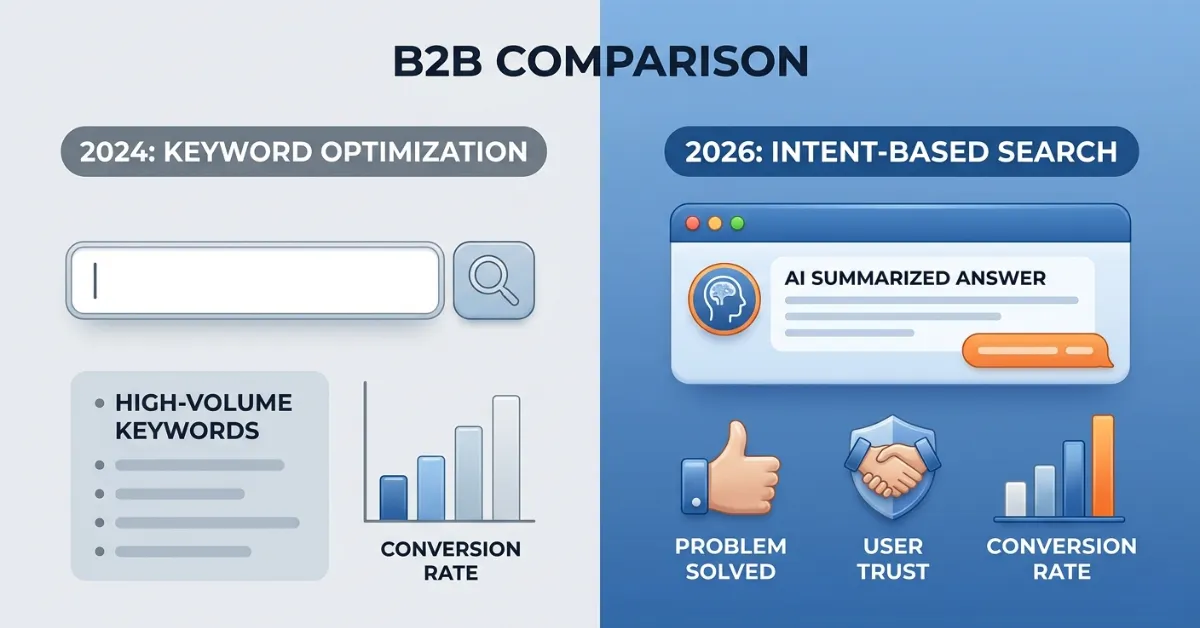
How can businesses effectively navigate the evolving landscape of SEO when traditional keyword strategies prove inadequate? The shift from keyword-centric approaches to intent-based search has made outdated tactics less relevant. In 2026, AI-driven platforms prioritize thorough answers over merely optimized keyword content, rendering keyword stuffing and generic articles ineffective.
Additionally, the emergence of zero-click searches means users find instant solutions without visiting websites, undermining traditional traffic-driven strategies. According to research on Zero-Click behavior, more than 50% of searches now end without a click to a third-party website. As search engines act more like answer engines, merely ranking high no longer suffices.
Websites must now anticipate user intent and provide direct solutions, integrating diverse content formats for varied platforms. Adapting to this new reality requires a fundamental shift from volume-centric keyword strategies to understanding and addressing user intentions.
The Importance of User Experience in SEO Rankings
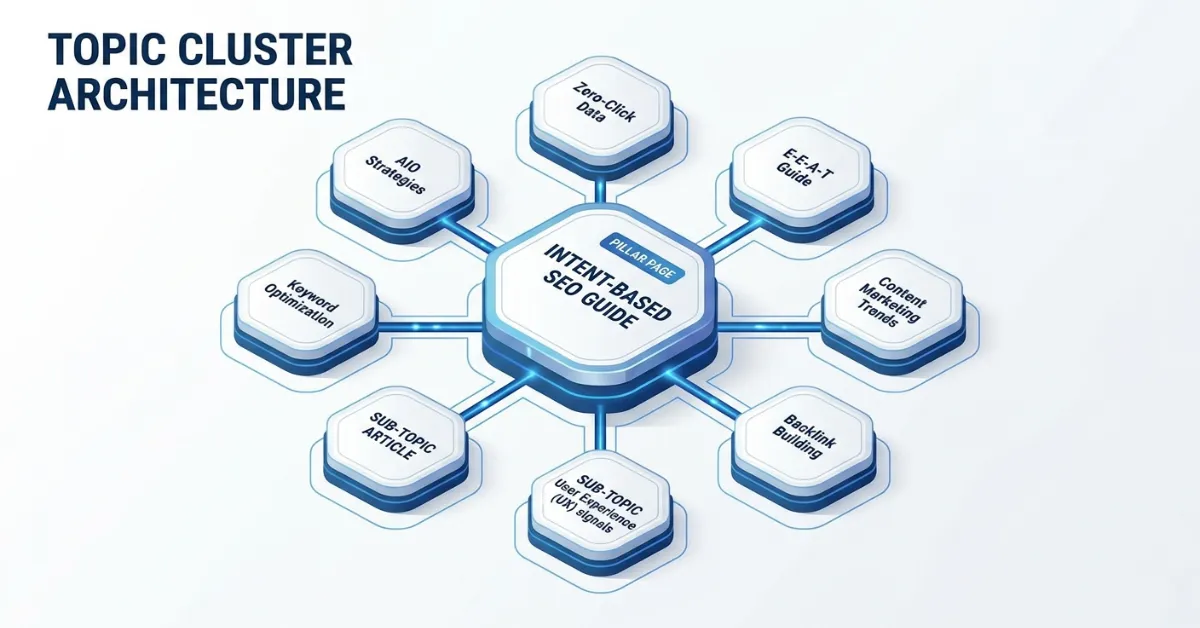
As search engines increasingly prioritize user intent over traditional keyword optimization, the importance of user experience (UX) in SEO rankings has never been more pronounced. A seamless UX not only enhances user engagement but also signals search engines of quality content. Factors influencing UX include:
- Page Load Speed: Quick loading times create immediate access to information.
- Mobile Optimization: Adapting layouts guarantees usability across devices.
- Intuitive Navigation: Clear pathways help users find information effortlessly.
- Readability: Well-structured content with appropriate spacing aids comprehension.
- Visual Appeal: Engaging visuals support content and keep users interested.
Ultimately, improved UX fosters higher engagement rates, reduced bounce rates, and increased dwell time, all of which positively influence SEO rankings in an intent-driven search landscape. This is why Google’s Core Web Vitals remain a primary ranking signal in 2026.
Understanding Different Types of Search Intent
Why is understanding intent-based search essential in today’s SEO landscape? Search intent refers to the underlying motivation behind a user’s query and can be categorized into four main types: informational, navigational, transactional, and commercial investigation.
- Informational intent seeks answers or knowledge.
- Navigational intent focuses on reaching a specific site.
- Transactional intent indicates a desire to purchase.
- Commercial investigation involves comparing services or products.
Recognizing these distinct types allows marketers to tailor their content effectively, ensuring it meets the expectations of users based on their specific intentions.
Aligning Content With User Intent
What strategies can marketers employ to guarantee their content aligns with user intent? To effectively connect their content with the needs of users, marketers must adopt several key strategies.
- Conduct thorough audience research to understand specific user needs and preferences.
- Utilize analytics tools to gain insights on search behavior and trending topics in real-time.
- Create content that directly answers common questions to enhance user satisfaction.
- Incorporate diverse formats, including articles, videos, and infographics, to cater to various consumption styles.
- Regularly update content to guarantee relevance and accuracy as user intent evolves.
Content Creation for Various User Intent Types
Understanding and aligning content with user intent is an essential step towards effective digital marketing. Marketers must create content tailored to various user intent types.
For informational intent, providing concise answers or how-to guides can engage users effectively. Navigational intent requires clear directions to sites or resources, reinforcing brand presence. Transactional intent focuses on persuasive content, encouraging conversions through product descriptions or testimonials. Meanwhile, commercial intent content should compare products or services, appealing to users in the decision-making phase.
By addressing these distinct intents, businesses can enhance relevance, improve user engagement, and align content with the evolving expectations of search engines and consumers alike.
Measuring the Impact of Intent-Based Content
To effectively evaluate this impact, marketers should focus on:
- Engagement Rates: Monitor user interactions such as time spent on page and scroll depth.
- Conversion Metrics: Analyze lead generation and sales conversions linked to specific content pieces.
- Traffic Quality: Assess the quality of traffic, distinguishing between high-intent and low-intent sources.
- Social Shares: Track how often content is shared across platforms to gauge audience interest.
- User Feedback: Utilize surveys and feedback forms to gather insights on content effectiveness.
Case Studies: Brands Winning With Intent-Based Strategies
Successfully adapting to intent-based strategies has proven beneficial for various brands. For instance, a leading e-commerce platform shifted its focus from broad keywords to high-intent queries, resulting in a 40% increase in conversions. Additionally, wellness brands have begun optimizing for E-E-A-T signals to target specific user questions, thereby enhancing their visibility within AI-driven search results. This strategic pivot not only improved user engagement but also solidified their authority in their respective niches.
Predicting Future Search Trends and User Behavior
As users increasingly seek direct answers, their search behavior is expected to evolve in several ways:
- Preference for voice and conversational queries.
- An increasing reliance on multimodal search through images and video.
- Greater demand for personalized, context-aware content.
- A focus on local search, driven by immediacy and relevance.
- Shifting toward app-based searches rather than traditional browsers.
Actionable Steps for Adapting Your SEO Strategy for 2026

Adapting an SEO strategy for 2026 requires a fundamental shift in approach. To thrive, marketers should focus on targeting high-intent keywords that indicate purchasing decisions. Additionally, building topic clusters enhances topical authority, aligning content with user interests. Implementing the principles of E-E-A-T—Experience, Expertise, Authority, and Trustworthiness—is crucial.
Content should be optimized for Answer Inclusion with clear, structured data that AI can easily interpret. Finally, diversifying presence across platforms beyond Google, such as YouTube and social media, guarantees visibility where varied audience inquiries arise.
Conclusion
In the rapidly shifting landscape of SEO, strategies that once flourished may now wither like leaves in autumn. Embracing intent-based search is not just a trend but a necessity for survival. As search engines evolve to prioritize user goals, brands must adapt or risk fading into obscurity. By harmonizing content with user intent and enhancing the overall experience, businesses can navigate the turbulent waters of digital marketing and emerge resilient in the face of change.